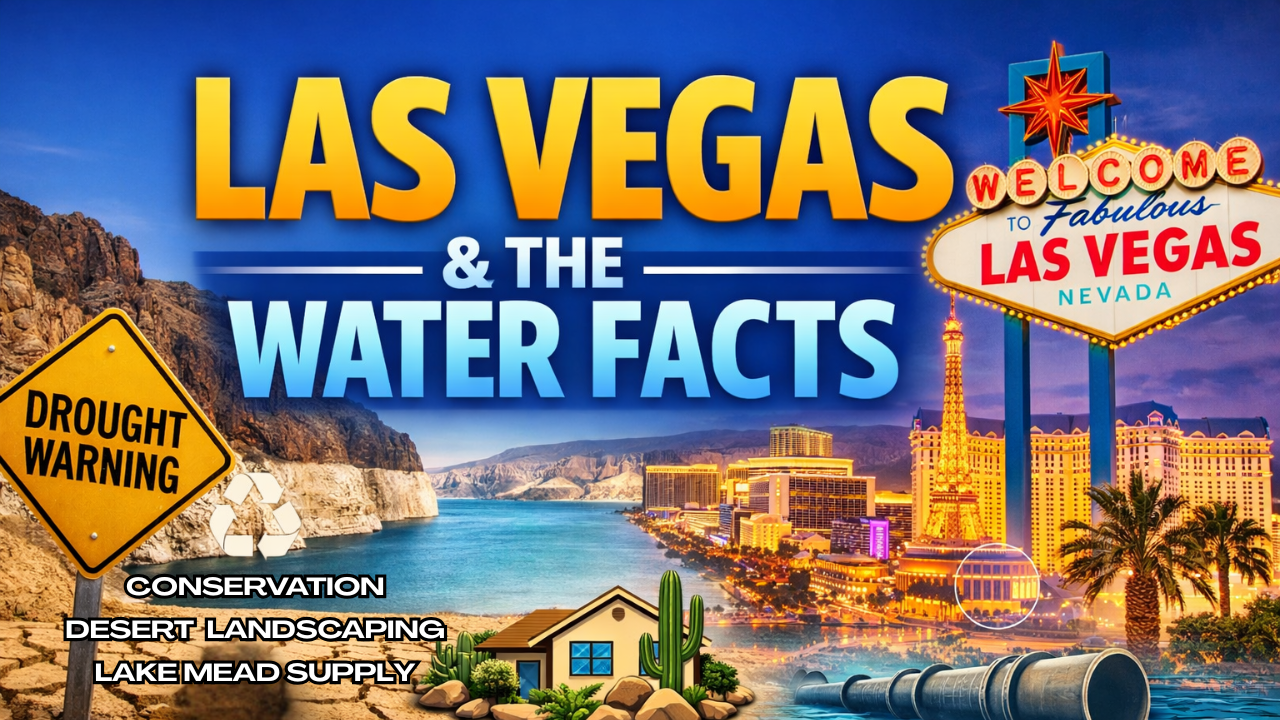
Since we’re headed into what most people call Dry January, let’s talk about something else that’s dry:
water in the desert — and whether Las Vegas actually has enough of it.
If you’ve been researching a move here, you’ve probably typed at least one of these questions into Google or AI search:
Will Las Vegas run out of water?
How does Las Vegas get its water?
Is Lake Mead drying up?
Is it smart to retire in Las Vegas with the water situation?
Totally fair questions.
Yes — we live in the Mojave Desert.
Yes — Lake Mead levels make dramatic headlines.
And no — the city is not ignoring the issue.
Here’s the real story.
The Reality: Las Vegas Is One of the Most Water-Efficient Cities in the U.S.
It sounds counterintuitive, but it’s true.
Las Vegas has become a national leader in water conservation and reuse, and the strategy isn’t “hope for more rain.”
It’s engineering + planning + policy.
Here’s how the city actually secures long-term water:
1. Almost all indoor water is reused
Nearly 99% of indoor water goes back to Lake Mead after treatment.
Shower water
Toilet water
Dishwasher water
It’s cleaned, returned, and credited back to us. That’s huge.
2. Grass is basically banned
No more decorative lawns in new construction.
You’ll see:
desert landscaping
shade trees
drip irrigation
And you’ll see fewer sprinklers running down the street — because…
3. Water waste is enforced
Overwatering? Street runoff? Broken sprinklers?
You can be fined — and yes, they do write tickets.
4. Incentives to remove lawns
The Water Smart Landscapes Program pays homeowners and HOAs to swap grass for desert landscaping. It saves billions of gallons each year.
5. Backup supply strategies are already underway
These include:
groundwater recharge
potential desalination partnerships
deep water intakes (“third straw”) in Lake Mead
Las Vegas didn’t wait for a crisis to plan. The planning has already been happening.
So… will Las Vegas run out of water?
Short answer: not likely.
Could policies change? Of course.
Could conservation increase? Yes — and it already is.
But between recycling, diversification, and strict usage rules, Las Vegas has built one of the most resilient water systems in the Southwest.
The cities in trouble long-term are the ones that:
don’t recycle water
allow unlimited suburban lawns
depend only on rainfall
That isn’t us.
What this means if you’re thinking of moving here
If you’ve wondered:
“Is it safe to retire in Las Vegas with the water situation?”
“Will my home lose value because of water issues?”
“How is the water issue affecting Las Vegas real estate?”
Here’s the bottom line:
water is a real issue
but Las Vegas is way ahead of the curve
long-term planning is already in motion
buyers and retirees continue to move here confidently
This is still one of the most popular destinations in the country for:
55+ active adults
second-home buyers
relocation from California
sunshine seekers doing “Dry January” — literally and figuratively
Coming up: we’re going deeper on this topic
In true Vegas Confidential style, I’ll be unpacking more on:
the truth behind Lake Mead headlines
how recycling actually works
what future conservation rules might look like
how mega-projects impact water demand
So stay tuned — and if you’ve got questions about:
retiring in Las Vegas
55+ communities
new construction vs resale
where the best incentives are
I’m always happy to talk.
Subscribe and hit the notification bell over on The New Home Experts Las Vegas YouTube Channel so you don’t miss it.
Work with an expert!
GET THE LATEST COMMUNITY NEWS AND UPDATES VIA EMAIL AND TEXT
[email protected] | 702-335-4779
www.jennifergraffrealtor.com
JOIN OUR NEWSLETTER
Check out this article next